Short answer
Halal meat is meat sold with a claim that it meets halal requirements, from the Arabic word for permitted. For a shopper it comes down to the seller’s label, the butcher’s answers and the certificate, if one is offered, so ask the counter directly.
Halal meat is meat that a seller labels as halal, an Arabic word meaning permitted, usually beef, lamb, goat or chicken from a butcher counter or a packaged shelf. For a shopper, the practical test is the label, the butcher’s answers and any certificate the store can show.
What does halal mean on a meat label?
Halal on a meat label is the seller’s statement that the meat meets halal requirements. The word is Arabic for permitted, and in food it refers to the dietary standard followed in Islamic communities, so the label tells a shopper which meat is sold to that standard.
This guide does not make religious rulings and does not certify any product. It explains the label the way a food guide would: what a shopper sees, what is worth asking and how the label is used in a store. Different certifying organizations and different communities apply their own detailed standards, so the label can carry slightly different meanings from one shop to another. When the detail matters to you, the person at the counter is the one to ask.
What kinds of halal meat do butcher counters sell?
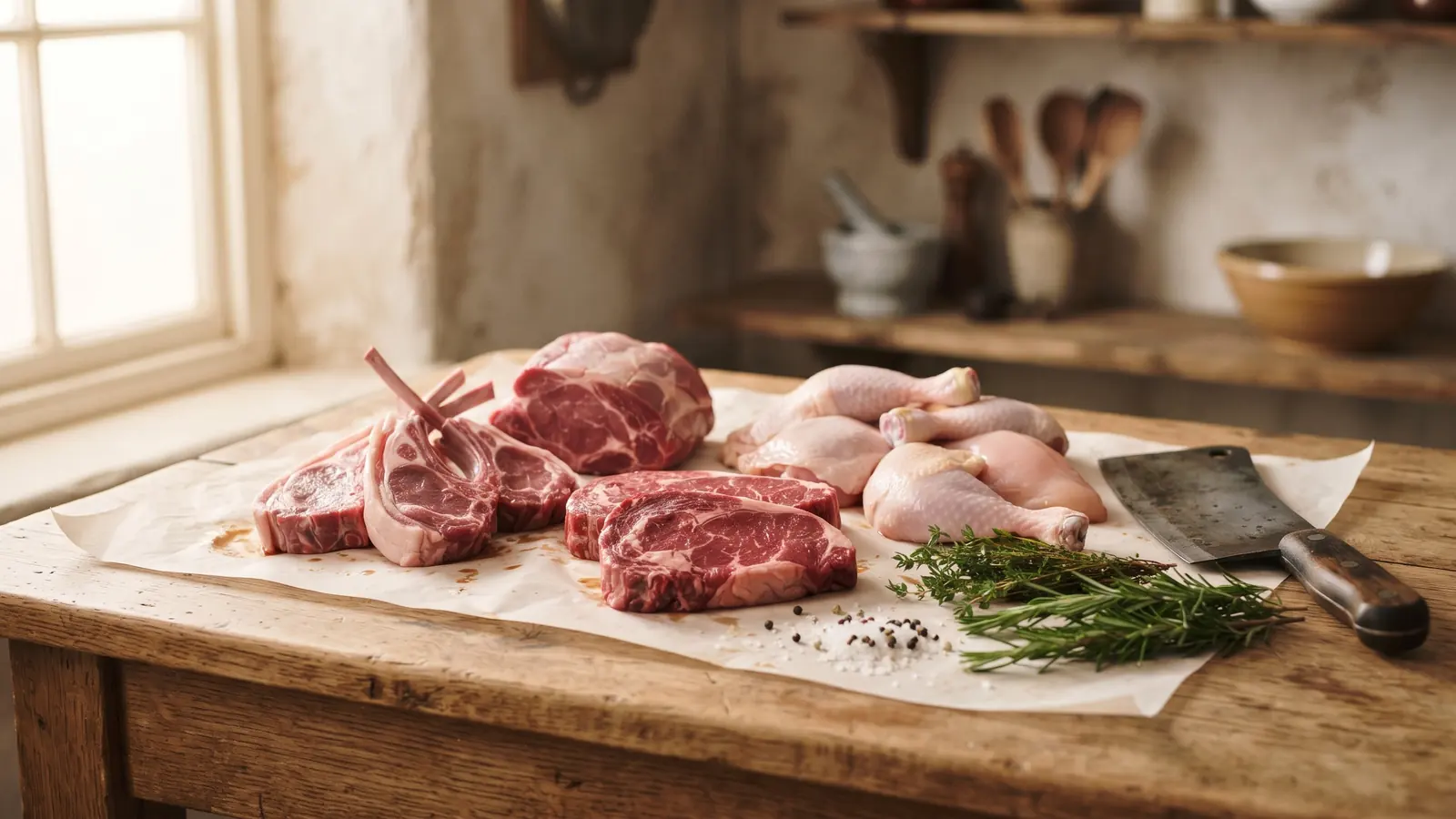
Halal butcher counters usually sell beef, lamb, goat and chicken, plus sausages and ground meat made from those animals. The range depends on the shop and the day.
| Meat | Common cuts and forms | Typical home uses |
|---|---|---|
| Beef | Steaks, roasts, short ribs, ground beef, cubes | Grilling, braising, kebabs, burgers |
| Lamb | Chops, shoulder, leg, shanks, cubes | Roasting, grilling, stews |
| Goat | Bone-in pieces, leg, shoulder | Slow cooking, curries, stews |
| Chicken | Whole birds, thighs, breasts, wings | Roasting, frying, skewers |
| Sausage | Beef, lamb or chicken sausages such as merguez | Pan frying, grilling |
Not every counter carries every row. A counter that is mainly known for beef and chicken may stock lamb on certain days only, and goat is often sold by request or in a particular season.
How do you shop for halal meat at a butcher counter?
Start by deciding what you will cook, then name the dish and the headcount to the butcher. Butchers can cut, trim and grind to order, and the dish tells them which cut suits it.
- Pick the dish first, for example kebabs, a braise or a roast.
- Ask which cut the butcher would use for that dish and why.
- Say how many people you are feeding so the butcher can suggest a weight.
- Ask for the cut to be trimmed, cubed, bone-in or minced as the recipe needs.
- Ask when the meat was cut or delivered and how long it keeps.
Bring a cooler bag for a longer trip home. Raw meat should go into a refrigerator at 40°F or colder as soon as possible.
What questions are worth asking about halal meat?
The most useful questions are where the meat comes from, how the store knows it is halal, and whether a certificate or supplier name is available. Staff at a halal market get these questions often.
- Which supplier does this meat come from?
- Does the store hold a certificate for the meat, or for particular products?
- Is the meat fresh today or frozen and thawed?
- Is the sausage made in the store or bought in?
- Does this cut contain anything beyond the meat itself, such as a marinade or seasoning mix?
Ask the same questions for packaged products such as marinated meat, burger patties and processed items. The ingredients list on a package is more reliable than an assumption about the product.
How can you tell halal meat from the package?
Check the package for a certifier’s logo or a printed statement, the packing date, the use-by date and the ingredients list for processed products. A bare word on a handwritten label tells less than a certifier’s mark.
| What to look at | What it tells you |
|---|---|
| Certifier’s mark or statement | Which body, if any, stands behind the claim |
| Sell-by or use-by date | How long the meat can be kept |
| Weight and cut name | Whether the cut matches your recipe |
| Ingredients (processed meat) | Whether seasonings or additives are added |
| Handling note (fresh or previously frozen) | Whether to freeze it again |
A label is a claim made by the seller or packer. If something does not look right, or if the answer matters for you, ask the store directly.
How do you store halal meat at home?
Store halal meat exactly as you store other raw meat: in the coldest part of the refrigerator, wrapped, and below ready-to-eat foods. Use fresh meat within a few days or freeze it.
- Keep the refrigerator at 40°F or below and the freezer at 0°F.
- Use raw ground meat and sausage within one to two days and steaks, chops and roasts within three to five days.
- Wrap tightly and label the date before freezing.
- Thaw in the refrigerator, not on the counter.
- Cook ground beef and sausages to 160°F, steaks and lamb chops to at least 145°F, and chicken to 165°F, as USDA guidance advises.
Wash hands, boards and knives after handling raw meat so it does not touch food that will be eaten uncooked.
Is halal meat cooked differently from other meat?
No. Halal meat is cooked the same way as any other beef, lamb, goat or chicken. A halal ribeye grills like any ribeye, and a halal lamb shoulder braises like any shoulder.
What changes the result is the cut, the age of the meat and the method. Tough, collagen-rich cuts such as shanks and short ribs suit slow, moist cooking. Tender cuts such as chops and steaks suit short, hot cooking. The label does not alter either rule.
What does Al Dar Halal Market say about its halal meat?
Al Dar Halal Market in Astoria presents itself as a halal grocery with a halal butcher counter, according to its MapQuest and Atly listings. The MapQuest listing names steak, chicken and merguez sausage at that counter.
The recorded range on this guide’s menu page is: halal steak and chicken, merguez sausage, labneh, tahini, olive oil, whole spices, specialty teas and fresh flatbreads. There is no price list on record, and no certification body is named in the listings, so the guide states none. Lamb, goat and oxtail are not recorded, so call the store before planning a recipe around them. The number is (347) 841-8333 on Google Maps. Hours are listed as 7 AM to 2 AM every day, checked on November 13, 2026, and the hours and location page has the address.
This guide is independent, takes no orders and cannot confirm stock. Use the store’s own channels for that.
Common questions
Is halal meat a different kind of animal?
No. Halal meat comes from the same animals as other beef, lamb and chicken. The word is a label that a seller applies, so the cuts, flavors and cooking methods match what the same cut would use anywhere.
How can I check that a package really is halal?
Look for a certifier’s mark or a printed statement on the package, and ask the butcher or store staff directly. Stores can usually say where their meat comes from. This guide cannot confirm any product.
Does halal meat cost more?
Prices depend on the cut, the animal and the store, not on the word halal alone. Al Dar Halal Market has no price list on record, so call the store or look at the counter for current prices.
Can I freeze halal meat?
Yes. Halal meat freezes like any other raw meat. Portion it, wrap it airtight, label the date and thaw it in the refrigerator. The label does not change the storage rules.
Is kosher meat the same as halal meat?
No. Halal and kosher are separate labels with their own rules, although they overlap in some practices. A store that sells one does not automatically sell the other, so read the label.
This page is part of the independent guide to Al Dar Halal Market, which has the address, hours and menu.
This article is general information from an independent guide, not from Al Dar Halal Market itself. For the store’s current details see hours and location.