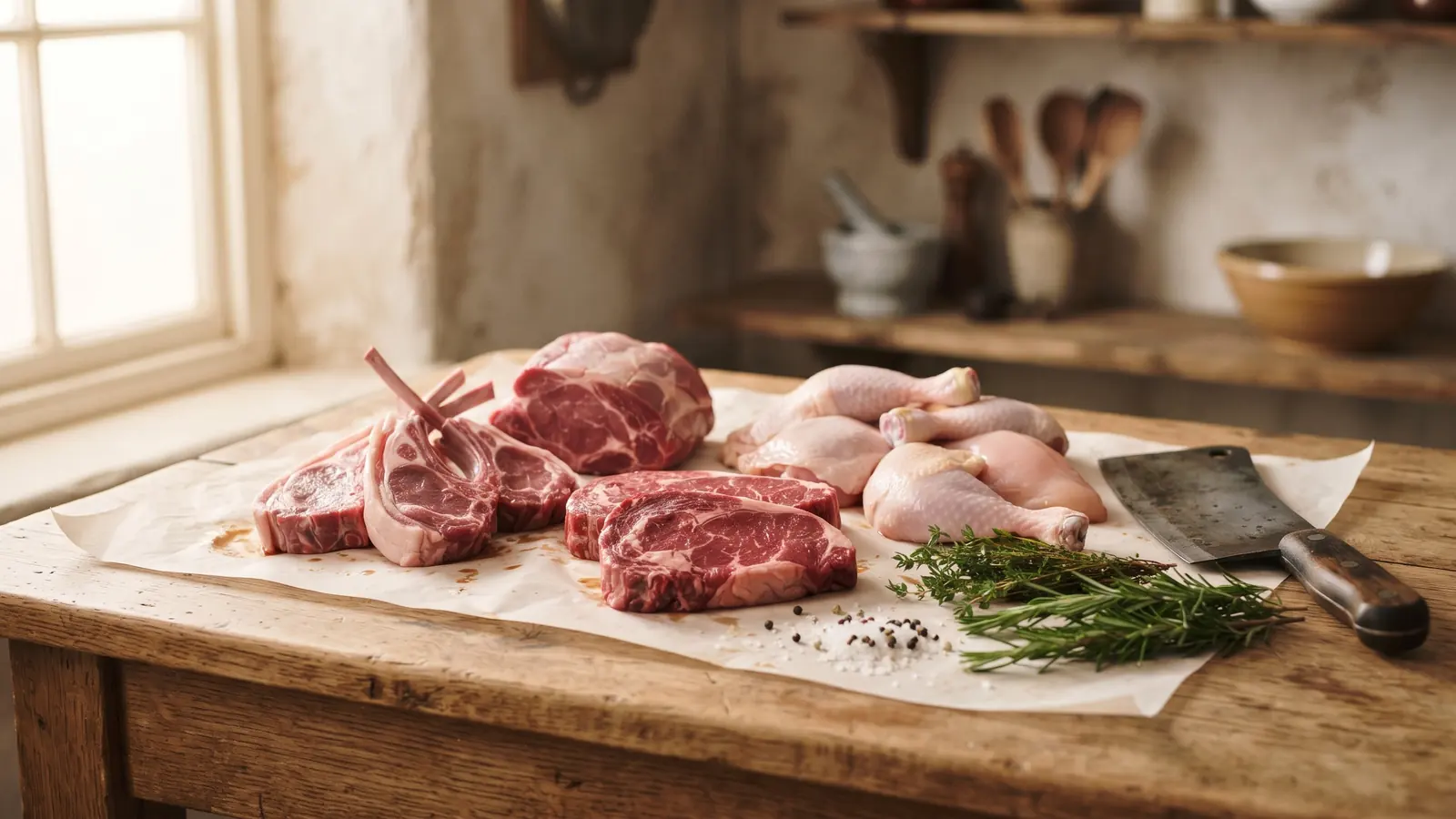
Short answer
Goat meat is lean red meat from goats, with a taste close to lamb but more mineral and slightly sweet. It has little fat and a lot of connective tissue, so most cuts are best cooked slowly with moisture until tender.
Goat meat is lean red meat with a flavor close to lamb, a little earthier and sweeter, and a firm texture that turns tender with slow, moist cooking. Goat appears in stews and curries across the Middle East, North Africa, South Asia and the Caribbean.
What does goat meat taste like?
Goat meat tastes like a leaner, more mineral version of lamb, with a faint sweetness. The flavor is stronger than beef and milder than well-aged mutton.
Age matters most. Meat from a young kid is pale and mild, and meat from an older animal is darker and more assertive. Goat carries less fat than lamb, so the flavor comes from the meat itself rather than from fat, and the cooking method decides whether the result feels rich or dry.
What are the common cuts of goat?
Goat is usually sold cut into bone-in pieces for stewing, plus a few larger cuts for roasting. A butcher counter often cuts it to order.
| Cut | What it is | Best cooking method |
|---|---|---|
| Leg | Large muscle group, lean | Roasting, slow braising, boneless kebabs |
| Shoulder | Fattier, more connective tissue | Braising, stewing |
| Rib chops | Small chops with a bone | Quick grilling or pan searing |
| Shank | Lower leg, very tough until cooked long | Long braises, soups |
| Neck | Bone-in slices, rich in collagen | Stews and curries |
| Stew mix | Bone-in chunks from several parts | Curries, stews, rice dishes |
Bone-in pieces give a richer broth, because collagen and marrow dissolve into the liquid as it simmers.
How do you cook goat meat so it is tender?
Cook goat low and slow in liquid for most cuts, and keep the heat gentle enough that the pot barely bubbles. Lean meat with plenty of connective tissue tightens when boiled hard and relaxes when simmered.
- Pat the meat dry and season with salt.
- Brown the pieces in batches in hot oil.
- Soften onion, garlic and spices in the same pot.
- Add the meat back with stock, tomato or water to almost cover.
- Cover and simmer gently on the stove or in a 300°F oven for two to three hours.
- Test a piece with a fork. It should pull apart with little pressure.
A pressure cooker shortens the time to about 45 minutes to one hour for stew pieces. Marinating overnight in yogurt, lemon juice and spices also helps tenderize and mellow the flavor.
Can you grill or roast goat meat?
Yes, for tender cuts such as rib chops, boneless leg pieces and small kebab cubes. Tougher cuts need a long roast with a covered dish or a braise instead.
- Marinate chops or cubes for several hours with garlic, lemon, olive oil and herbs.
- Grill over medium-high heat and turn once, cooking to an internal temperature of at least 145°F, as USDA guidance for goat and lamb advises.
- Rest the meat for three minutes before serving.
- For a roast leg, cook it covered at 325°F with a little liquid in the dish, then uncover to brown for the last half hour.
Lean goat dries out quickly when grilled past medium, so watch the time on small cuts.
What dishes are made with goat?
Goat is cooked in stews, curries, soups and rice dishes in many cuisines. It is a common festive and family meat.
- Curry goat in Jamaican and Indian cooking.
- Birria, a spiced Mexican stew, traditionally made with goat in some regions.
- Mandi and similar slow-cooked rice dishes from Yemen and the Gulf, where lamb and goat are both used.
- Spiced stews and tagines in North Africa, which use lamb or goat according to the cook.
- Pepper soups in West Africa.
The cooking techniques overlap. A browned base, a long simmer and fragrant spices suit goat across all of these.
Goat meat vs lamb: what is the difference?
Goat is leaner, more mineral in taste and tougher than lamb, while lamb is fattier, milder and cooks faster. Both can be used in the same stews and kebabs.
| Feature | Goat | Lamb |
|---|---|---|
| Fat | Lean, little marbling | More fat, richer |
| Flavor | Earthier, slightly sweet | Milder, buttery |
| Texture | Firm, needs slow cooking | Softer, quicker to tender |
| Cooking time (stew) | Two to three hours | About 90 minutes to two hours |
| Common substitute | Lamb shoulder | Goat leg or shoulder |
When substituting lamb for goat, shorten the cooking time and remove extra fat. When substituting goat for lamb, add time and a little extra liquid.
How do you buy and store goat meat?
Buy goat from a counter that can tell you the cut and, if possible, the age of the animal, and store it cold. Raw goat keeps in the refrigerator for three to five days and in the freezer for several months.
- Look for firm, pinkish red flesh without a sour smell.
- Ask for bone-in stewing pieces cut to about two inches.
- Keep the meat at 40°F or below and use it within three to five days.
- Freeze in portions, wrapped airtight, and thaw in the refrigerator.
Halal goat is sold at halal butchers in many cities. The word is the seller’s label, so ask the counter where the meat comes from.
What are common mistakes when cooking goat?
The common mistakes are cooking it too hot, too briefly or without enough liquid. Goat is lean, so it punishes rushed cooking more than fattier meats do.
- Boiling hard instead of simmering, which tightens the fibers.
- Skipping the browning step, which leaves a flat, boiled taste.
- Cutting the pieces too small, so they dry out before the connective tissue softens.
- Leaving the pot uncovered for the whole braise, so the liquid disappears.
- Serving straight from the pot with no rest, when ten minutes off the heat lets the juices settle.
Bone-in pieces forgive more than boneless ones, and a splash of acid such as lemon, vinegar or yogurt in the marinade helps the texture.
Is goat meat available at Al Dar Halal Market?
The store’s listings do not record goat. Al Dar Halal Market in Astoria is described by MapQuest as a halal grocery with a butcher counter selling steak, chicken and merguez sausage, so goat is not confirmed.
The recorded range appears on this guide’s menu page. If a goat recipe is the plan, call the store at (347) 841-8333, the number Google Maps shows, and ask whether goat is carried and whether the butcher can cut it. Hours are listed as 7 AM to 2 AM every day, checked on November 13, 2026. See the hours and location page for the address. This guide is independent and takes no orders.
Common questions
Is goat meat the same as mutton?
No. Goat meat comes from goats, while mutton is meat from mature sheep. In some regions and recipes, including some Caribbean ones, the word mutton is used loosely for goat, so check the label and ask the butcher.
How long should goat meat cook?
Bone-in stewing pieces usually need two to three hours of gentle simmering or braising until the meat pulls from the bone. Small, tender cuts such as chops need only minutes on a hot grill or pan.
Does goat meat taste gamey?
Goat has a stronger, more mineral flavor than beef, and a young animal tastes milder than an older one. Browning, spices, garlic and an acid such as yogurt or lemon all soften the impression.
Can I substitute lamb for goat in a recipe?
Yes, in most stews and curries. Lamb has more fat and cooks a little faster, so check tenderness earlier and skim extra fat from the pot at the end.
Is goat meat sold at Al Dar Halal Market?
The store’s listings do not mention goat. They name steak, chicken and merguez at the butcher counter, so call the store and ask before planning a meal around goat.
For the address, opening hours and menu, see Al Dar Halal Market in Astoria.
This article is general information from an independent guide, not from Al Dar Halal Market itself. For the store’s current details see hours and location.